
The building materials industry is changing fast—and the next generation will decide where it goes next. With seasoned pros retiring and fewer young people stepping in, the need for fresh talent has never been greater.
But here’s the good news: today’s emerging leaders aren’t just filling gaps—they’re bringing new ideas, tech-savvy skills, and a fresh perspective that can help the industry grow in ways we’ve never seen before.
So, what do they think it will take to attract and keep top young talent? How should companies balance tradition with innovation? And what advice do they have for others considering a career in building materials?
We asked a few of our younger Employee Owners and summer interns for their unfiltered take. Here’s what they told us.
What do you think companies in the building materials industry can do to better attract and retain young talent?
Beyond pay, strong onboarding, ongoing training, and mentorship are key to retention. Pairing new hires with experienced pros helps build confidence and skill. Flexibility, clear advancement paths, and a sense of purpose – like helping people build homes and communities or supporting our partners to be successful at their position – also motivate younger workers.
–Drake Thomsen, Field Sales Rep, Building Materials
I think that building your brand on LinkedIn is a great place to start. In my experience in college, LinkedIn has been a discussion point in the curriculum and there are assignments centered around it. More and more students are becoming active users on LinkedIn which creates a big network where companies profiles and posts can be shared.
–Erik Anderson, IT Intern, Admin
How can companies balance tradition with innovation when developing talent?
The best companies respect the experience of long-time team members – the relationships they’ve built, the way they serve customers, and the deep product knowledge they bring. At the same time, companies need to embrace new tools, technologies, and ideas to stay competitive. Experienced employees should also stay open to fresh ideas from coworkers who are new to the industry – sometimes an outside perspective is exactly what’s needed to move things forward.
–Drake Thomsen, Field Sales Rep, Building Materials
I think that “it has always been done this way” should never be an acceptable justification for a process’s existence. New talent often provides fresh eyes to evaluate potentially outdated processes that current staff are too entrenched in to realize.
–Caleb Krugman, Digital Marketing Specialist, Marketing
What qualities make a good manager or mentor?
A good manager or mentor is also a good listener. They are approachable while also being able to hold team members accountable. That accountability extends to their willingness to do a job with the team if it is needed and positions them as a role model for how to go about your business at the company. There can also be an element of fun, a willingness to engage in topics outside of the professional sphere and connect with their team members.
–Olivia Rutkowski, Customer Experience Manager and Door
A good manager is willing to do what it takes to keep the team afloat, even if it means sweeping floors or running a cash register. I was lucky to have a manager like this at both of my first two places of employment, and they really showed what it meant to lead from the front lines.
–Brenden Thiel, Customer Service Representative, Door Division
For some, it could be a more hands-off leader who trusts your ability to work independently. For others, it could involve more regular feedback and reassurance. I think it boils down to someone who provides clear expectations regarding performance and conduct. A good mentor would be someone who encourages personal and professional growth in addition to emotional well-being.
–Caleb Krugman, Digital Marketing Specialist, Marketing
What advice would you give other early-career professionals considering the building materials field?
Work hard. Do more than what is asked of you even when you don’t feel like it. This could mean many things; it could mean staying late or coming in early. It could also mean getting the office donuts.
–Sam Hower, Supply Chain and Purchasing Intern, Purchasing
Don’t be afraid to admit when you don’t know something but letting the customer know that you’ll get back to them with an answer—what matters most is your willingness to find the answer and follow through. The building materials industry is incredibly broad, with a steep learning curve, and no one expects you to know everything right away. What earns respect, especially from customers, is your transparency and your commitment to learning. Whether that means tapping into online resources, asking your peers, reaching out to trusted vendors, or leaning on industry mentors, being resourceful and proactive will take you far.
–Jayme Stauffenecker, Outside Sales Representative, Cottage Grove, MN
Additional Industry Articles

Lumbermen’s New Partnership with James Hardie
Shawn Montague answered questions about how this partnership was formed, what it means for our customers, and where it can take the company in the future.

Lumbermen’s Named Strategic Distribution Partner by James Hardie
Through this strategic partnership, Lumbermen’s will now offer James Hardie’s complete portfolio of exterior building products, including Hardie® siding and trim, as one of only two distribution partners to represent its portfolio.

AI for Building Materials Marketing: 5 Best Practices
Artificial intelligence has quickly become one of the most valuable marketing tools available, especially for building materials dealers who don’t have a dedicated marketing person or department.
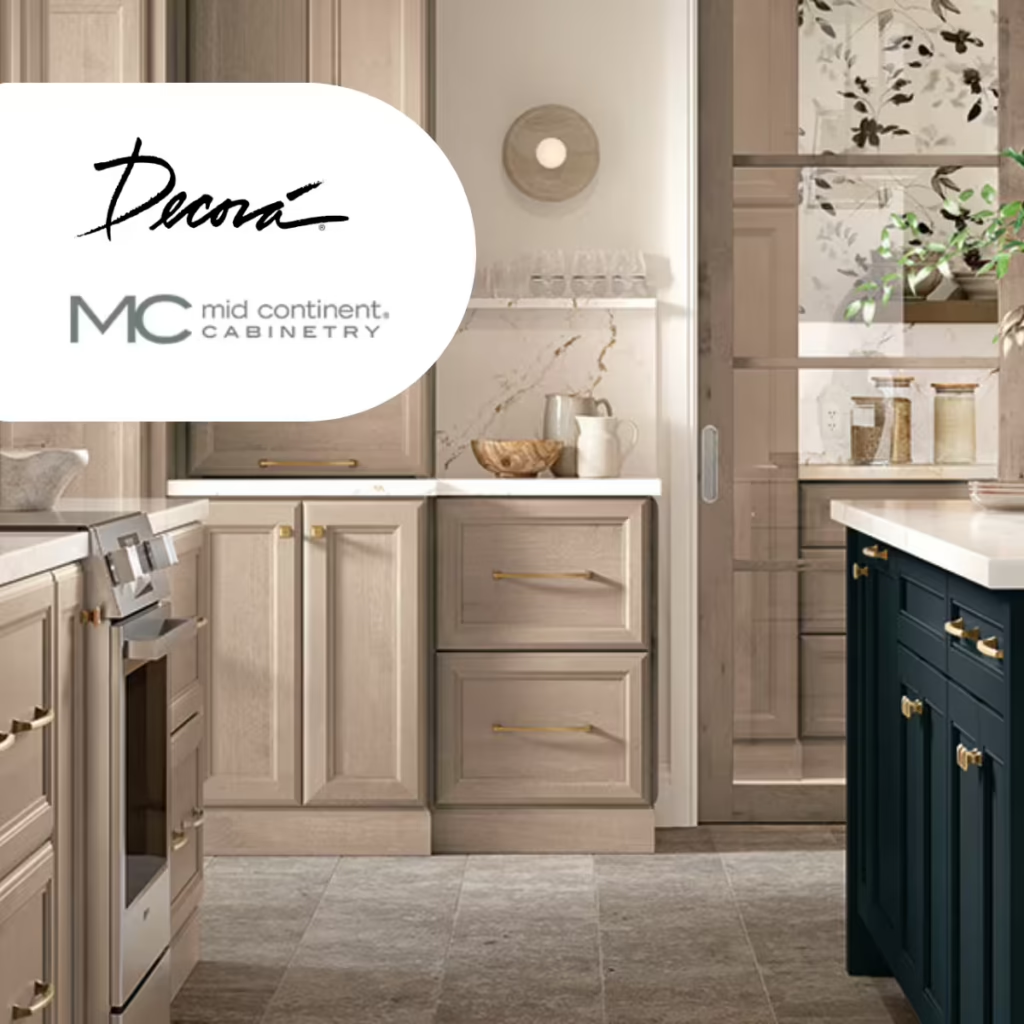
Decora & Mid Continent Cabinetry Now Available
Lumbermen’s is pleased to introduce two new cabinet lines, including Decora and Mid Continent.

Lumbermen’s Expands Door Solutions with New EMTEK Hardware Partnership
Lumbermen’s is pleased to announce a new partnership with EMTEK, giving customers access to premium door hardware that perfectly complements the doors we manufacture.

Training Made Easier: Downloadable Diagrams for Your Team
We’ve created a series of visual training guides that break down the key components of decks, roofs and siding systems. These diagrams are designed to help new team members quickly become familiar with industry terminology, product components, and construction basics.

5 Ways to Upsell Your Deck Jobs
Margins on standard decks can be tight, but there’s an easy way to improve your bottom line. By adding a few high-value features, you can turn a basic deck into a more functional, finished outdoor space your customers will appreciate.

Making Social Media Manageable (Free Template Download for Dealers and Builders)
When I talk with our dealers about their social media efforts, most already understand its importance and the role it plays in building a brand. Where they tend to struggle, however, is with two simple questions: What should we post? and Who’s going to do it?

Developing Tomorrow’s Leaders in Building Materials: Insights from Lumbermen’s Leadership
How can companies support the next generation while honoring the industry’s deep expertise? And what can job seekers learn from those already leading the way? We asked Lumbermen’s leadership to share their insights.
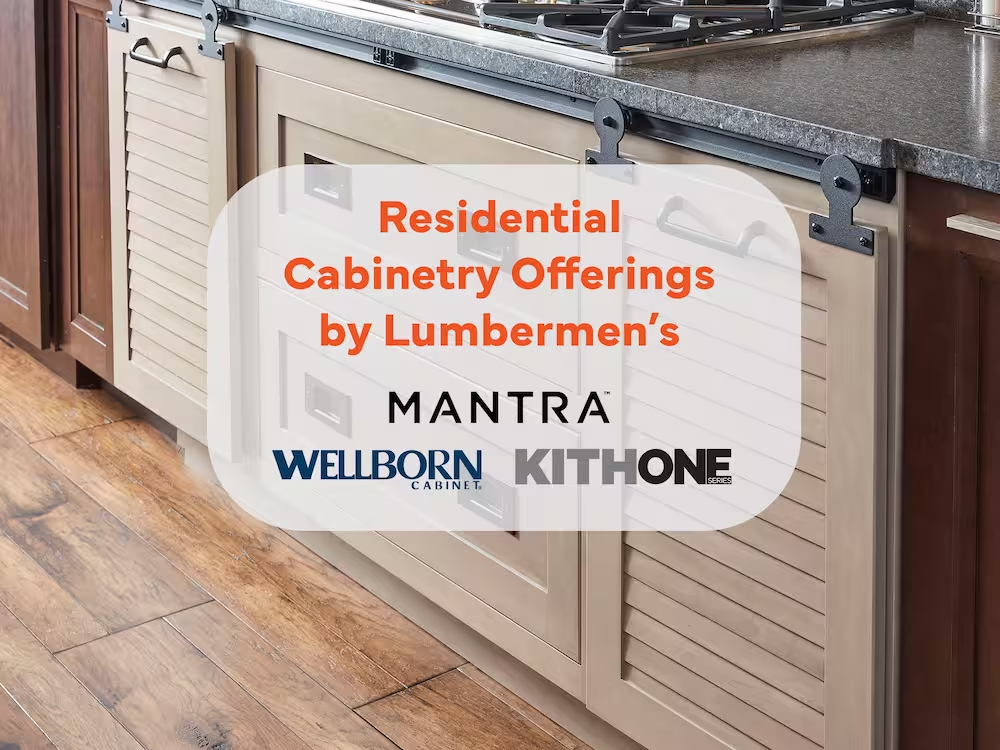
Residential Cabinetry Offerings by Lumbermen’s
With countless styles, materials, construction methods, and price points available, choosing the right cabinetry can sometimes feel overwhelming. For homeowners, the decision often balances aesthetics, durability, and budget.

Top Dealers Recognized for Cabinet Sales
Last month, following our annual Product Fair, we hosted a special event to celebrate our top-performing dealers at The Atrium at Uccello’s in downtown Grand Rapids.
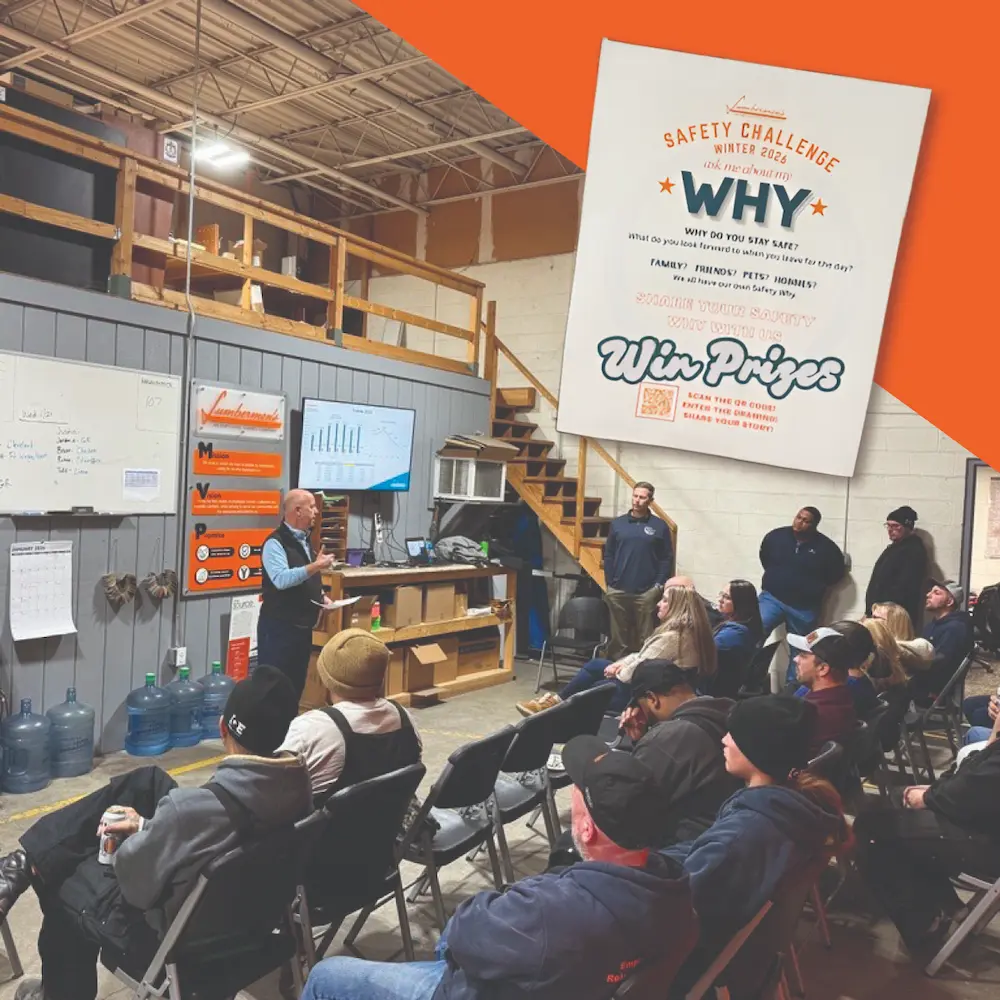
Making Safety Personal: Lumbermen’s Winter Safety Challenge
This winter, Lumbermen’s launched a Winter Safety Challenge designed to help employee owners reconnect with their personal “why” for working safely.

Lessons From the Show Floor: Rethinking Marketing in the New Year
Fresh conversations at our Product Fair revealed a few surprising marketing lessons. One simple mindset shift could change your results.

Deck the Door with Care: 5 Holiday Decorating Tips
The holidays are the perfect time to add warmth and cheer to your home’s exterior. But before you hang that wreath or wrap your garland, it’s important to make sure your décor won’t harm your door’s finish. These tips will help you create a festive look, without leaving a mark.

A Dealer’s Guide to Getting Found Online: Understanding SEO
A quick, plain-English guide to SEO basics that help your business show up in search and turn clicks into calls and quotes.

Managing Client Expectations in the Fall: A Guide for Residential Contractors
As temperatures drop and the days grow shorter, fall often becomes one of the busiest seasons for residential builders and contractors. While this seasonal rush can create valuable opportunities, it also brings challenges when it comes to managing client expectations.

6 Benefits of Stock and Semi-Custom Cabinets vs. Fully Custom Cabinetry
Whether you’re a designer helping clients bring their vision to life or a homeowner thinking about your own renovation, stock and semi-custom cabinets offer a smart alternative to fully custom cabinetry—providing the look, functionality, and durability you want, often with less stress and at a more accessible price.

Don’t Let Customers Pass You By: Keep Your Google Business Profile Fresh
An estimated 92% of all online search traffic happens via Google, which is why it is so important to make sure that your business is easy to find with robust and correct information.

Why Do Entry Doors Leak—And What Can Be Done About It?
Few things are more frustrating for a homeowner—or for the Dealer or installer involved—than discovering that an entry door is leaking. It’s especially concerning during heavy rainstorms, which are common in the hot summer months.

Snap, Store, Share: A Simple Marketing Habit for Builders
For builders and contractors, the busy season often leaves little time for anything beyond the work at hand. But while your crews are pounding deck boards, raising frames, and wrapping up beautiful transformations, you’re also surrounded by a powerful marketing asset: your jobsite.

Culture, Challenges, and Opportunities: A Q&A with Jeff Malloch, VP of Building Materials
Eight months into his new role, Lumbermen’s VP of Building Materials Jeff Malloch discusses the company, market trends, and dealer opportunities.

Spring for Storm Doors—2 Great Options from Larson & Lumbermen’s
After a long, dark winter, Midwest homeowners are eager for fresh air and sunlight, making spring the perfect time to promote storm doors to your customers.Lumbermen’s proudly offers a comprehensive inventory of Larson Storm Doors, ensuring we are your go-to source for their products.

3 Strategies to Grow Your Decking Business
Growing your decking business requires more than just quality craftsmanship—it takes strategic planning and effective customer engagement. Whether you’re looking to attract new clients, improve your sales approach, or enhance your brand’s visibility, having the right tools and knowledge at your disposal is essential. Here we explore three key strategies to help you expand your reach and increase your success.

4 Reasons Dealers Should Use Email Marketing to Connect with Customers
When meeting with Dealers to talk about marketing, I usually ask if they are using email marketing. Often, they aren’t—despite having a decent list of names and email addresses. The truth is, email marketing is a powerful tool for strengthening relationships with customers.

4 Steps to Elevating Your Decking Sales
Decking season is upon us and if the forecasts are accurate, the opportunities will be immense. In this article, we’ll share actionable steps and valuable insights to help you elevate your sales game and drive success in 2025.

Q&A with Shawn Klysen, Senior Sales Advisor, Minnesota Door Division
As part of Lumbermen’s exciting expansion of Door Manufacturing and Distribution operations in Minnesota, we were thrilled to welcome Shawn Klysen to our team as Senior Sales Advisor in December.
In this Q&A, Shawn shares his insights on the industry, his plans for driving success in Minnesota, and what excites him most about joining the Lumbermen’s family.

Preventing Frost and Condensation: Tips for Homeowners with Therma-Tru Entry Doors
When temperatures drop to zero degrees or below, it’s common for door dealers to receive calls from homeowners concerned about condensation and frost forming on their windows and doors. Aluminum components like ADA sills and astragals are more likely to form frost during these conditions due to the transference of exterior cold, mixed with warm moist air in the home.

Rethinking Relationship Building: Creating Unique Experiences Beyond the Golf Course
Are the events you plan aligned with what your customers really want? It’s important that they genuinely enjoy their time with you, so why not ask them what they’d like to do? You might be surprised by their suggestions.

4 Strategies to Boost Storm Door Sales
As the weather cools and we prepare for what’s predicted will be a particularly cold winter, now is a great time to promote your storm door offerings. In this article, we share actionable steps and valuable tools to help you elevate your sales game and drive sales!

4 Simple Tips to Elevate Your Marketing
We asked the Lumbermen’s Marketing team members to each share one tip Dealers can consider when amping up their marketing efforts this fall.

Lumbermen’s & Therma-Tru Launch Social Media Campaign Aimed to Drive Leads to Dealer
Lumbermen’s and Therma-Tru have recently initiated a dynamic social media campaign with the goal of enhancing customer engagement and increasing sales leads for dealers. This approach uses digital marketing strategies to emphasize the distinctive qualities and benefits of their products.

Enhancing Your Showroom with Inspirational Product Displays
SHOW, don’t just Tell. This is a business slogan that resonates throughout our industry when it comes to selling building materials. Customers having the ability to handle a roof shingle, see the exact shade of brown on a deck board, or test the sturdiness of a piece of siding can make all the difference when it comes to their purchasing decision.

Navigating Your Business in Uncertain Times
While the ride in the building materials industry has been pretty incredible the past couple of years, the truth is that a potential slowdown is looming. We can hope for changes addressing inflation and high interest rates, but in the meantime the focus should be on what you can control. Choose to take this time to finally take a breath and reevaluate your business and strategy.

Unlocking Innovation: Door Industry Highlights from the International Builders Show 2024
Every year, Las Vegas welcomes members of the building industry to the International Builders Show, and Lumbermen’s was there, along with thousands of other folks from around the world! There is so much to see and do, it is hard to take it all in, so here are some highlights from our friends in the Door industry and what they are excited about in 2024.

6 Advantages of Storm Doors
Storm doors are often an overlooked feature in many homes, yet they offer a wide range of benefits that can enhance both the aesthetics and functionality of your living space. Here we explore the many advantages of storm doors, from energy efficiency and security to natural light and improving indoor comfort.